
That Frustrating Moment When Your Garage Door Won't Stay Closed
You press the button on your remote, the garage door starts its descent, and then — just inches from the floor — it stops and reverses right back up. You try again. Same thing. Maybe you try holding the wall button, and it works, but the remote won't cooperate. Or maybe it reverses no matter what you do.
This is one of the most common garage door complaints we hear from homeowners in Columbia, and it's understandably frustrating. A garage door that won't close leaves your home exposed to weather, pests, and security risks. The good news is that this problem almost always has a clear, fixable cause.
Let's walk through the most likely reasons your garage door reverses before reaching the floor and what you can do about each one.
1. Misaligned or Dirty Safety Sensors
This is the number one cause of a garage door that reverses before closing, and it's the first thing we check on every service call.
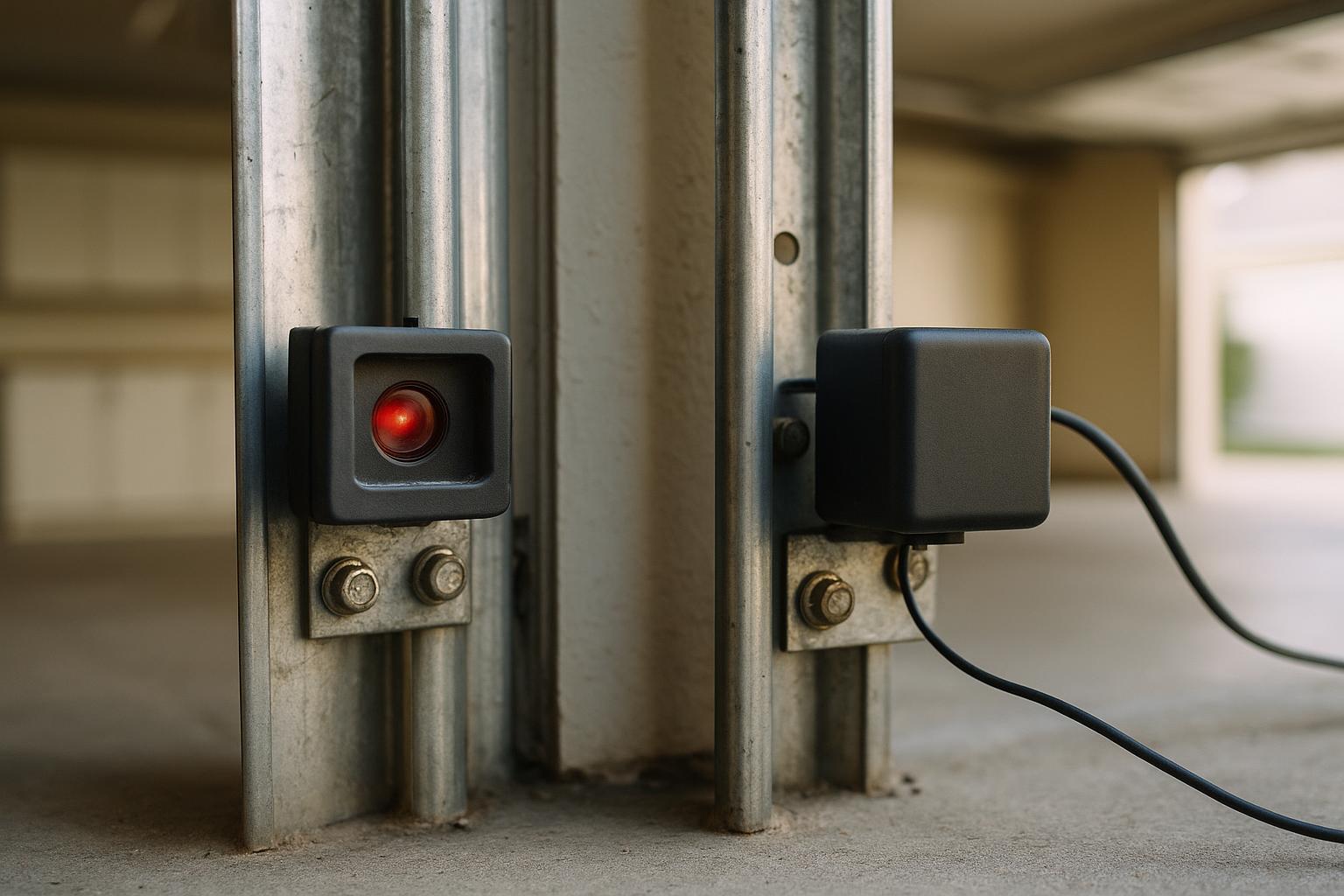
Since 1993, all garage door openers sold in the United States are required to have photo-eye safety sensors. These small devices sit on either side of your garage door, about six inches off the ground. They send an invisible beam across the opening. If anything breaks that beam — a child, a pet, a trash can — the door automatically reverses to prevent injury.
Here's what goes wrong:
- The sensors get bumped out of alignment. A stray kick, a bicycle wheel, or even vibration over time can shift one sensor so the beam no longer connects. When the beam is broken, the door thinks something is in the way.
- The lenses get dirty. Dust, cobwebs, and moisture can cloud the sensor lenses enough to weaken or block the beam.
- Sunlight interferes with the signal. Direct afternoon sun hitting one of the sensors can overwhelm the infrared beam. This is especially common in garages that face west here in Columbia.
- Wiring gets damaged. The thin wires running from the sensors to the opener can get pinched, frayed, or chewed by rodents.
Most sensor issues are indicated by a blinking light on the opener unit or on the sensors themselves. Check your owner's manual for the specific blink pattern — it usually tells you exactly what's wrong.
What You Can Do
Gently wipe both sensor lenses with a soft cloth. Then check that both sensors are pointing directly at each other and that their indicator lights are steady (not blinking). If the lights won't stay solid, the alignment may need adjustment or the wiring may need repair.
2. The Close-Limit Switch Needs Adjustment
Your garage door opener has a setting called the close-limit switch (sometimes called the down-limit or travel limit). This tells the opener how far the door needs to travel before it's fully closed.
If this setting is off — even by a small amount — the opener may think the door has hit an obstruction when it's actually just reaching the floor. The opener's safety logic kicks in and reverses the door to protect whatever it thinks it hit.
This problem often shows up after a new opener installation, a spring replacement, or even seasonal temperature changes that cause the metal tracks and door panels to expand or contract slightly.
What You Can Do
Most modern openers have limit adjustment screws or a digital setting you can access through the control panel. Your owner's manual will show you where these are. Small adjustments — usually a quarter turn at a time — can solve the problem. But if you're not comfortable making these changes, it's a quick fix for a technician.
3. Worn or Broken Springs Are Causing Resistance
Your garage door springs do the heavy lifting — literally. They counterbalance the weight of the door so the opener only has to provide a small amount of force to move it. When springs wear out, lose tension, or break, the door becomes much heavier than the opener expects.
As the door descends, the opener senses excessive resistance and interprets it as an obstruction. The safety reversal activates, and the door goes back up.
You might also notice the door moving slower than usual, the opener straining or making louder noises, or the door feeling extremely heavy if you try to lift it manually.
What You Can Do
Do not attempt to adjust or replace garage door springs yourself. These components are under extreme tension and can cause serious injury. Spring replacement is one of the most common services we perform for homeowners in Ellicott City, Elkridge, Laurel, and throughout the Columbia area, and it should always be handled by a trained technician with the right tools.
4. The Force Setting Is Too Low
In addition to travel limits, your opener has a force setting that controls how much power it uses to move the door. If the downward force is set too low, the opener may not have enough power to push the door all the way to the floor. It interprets the resistance of the door's own weight or weatherstripping as an obstruction and reverses.
What You Can Do
Like the limit switch, the force setting can usually be adjusted with a screw or digital control on the opener unit. Increase the down-force setting in small increments and test the door after each adjustment. Be careful not to set it too high — the door should still reverse if it encounters a real obstruction. Place a 2x4 flat on the ground under the door and test. The door should reverse when it contacts the board.
5. Damaged or Worn Tracks and Rollers
If your garage door tracks are bent, dented, or misaligned, the door can bind or stick as it moves. The opener detects this extra friction as resistance and reverses. Similarly, worn-out rollers that no longer spin freely create drag that triggers the safety reversal.
Listen for grinding, scraping, or popping sounds as the door moves. Look along the tracks for visible bends, gaps, or debris. Rollers that appear cracked, chipped, or no longer rotate need to be replaced.
What You Can Do
You can visually inspect the tracks and clear any obvious debris. Minor track issues can sometimes be corrected, but bent tracks or worn rollers should be addressed by a professional to ensure the door operates safely and stays properly aligned.
6. The Opener Logic Board Is Failing
If you've checked everything above and the door still reverses, the problem may be with the opener's logic board — the electronic brain that processes signals from the sensors, remote, and safety systems. Power surges, age, and moisture can all damage the circuit board.
A failing logic board can cause erratic behavior: reversing randomly, not responding to remotes, or activating on its own. If your opener is more than 10-15 years old, replacing the entire unit is often more cost-effective than replacing just the board.
When to Call a Professional
Some of these fixes — cleaning sensors, checking alignment, making small limit adjustments — are safe for most homeowners to try. But if the problem persists, involves springs or cables, or you're unsure what's causing the issue, it's time to call in help.
At Columbia Overhead Door Co, we diagnose and fix garage door reversal issues every week for homeowners in Columbia, Clarksville, Fulton, and surrounding communities. We'll tell you exactly what's wrong, explain your options, and get your door closing properly — usually in a single visit.
A garage door that won't close isn't just an inconvenience. It's a security and safety concern. Don't let it linger. Give us a call and we'll get it sorted out.