
Your Garage Door Shouldn't Sound Like That
You press the button, and instead of a smooth, quiet operation, your garage door greets you with a symphony of grinding, squealing, rattling, or banging. It's easy to brush off a noisy garage door as just an annoyance, but those sounds are often early warning signs of mechanical problems that can get worse — and more expensive — if ignored.
If you're a homeowner in Columbia and your garage door has started making unusual noises, here's what those sounds might mean and what you should do about them.
Common Garage Door Noises and What They Mean
Not all garage door noises are created equal. The type of sound your door makes can point directly to the source of the problem. Here's a breakdown of the most common culprits.
Grinding or Scraping
A grinding or scraping noise usually indicates metal-on-metal friction. This can happen when:
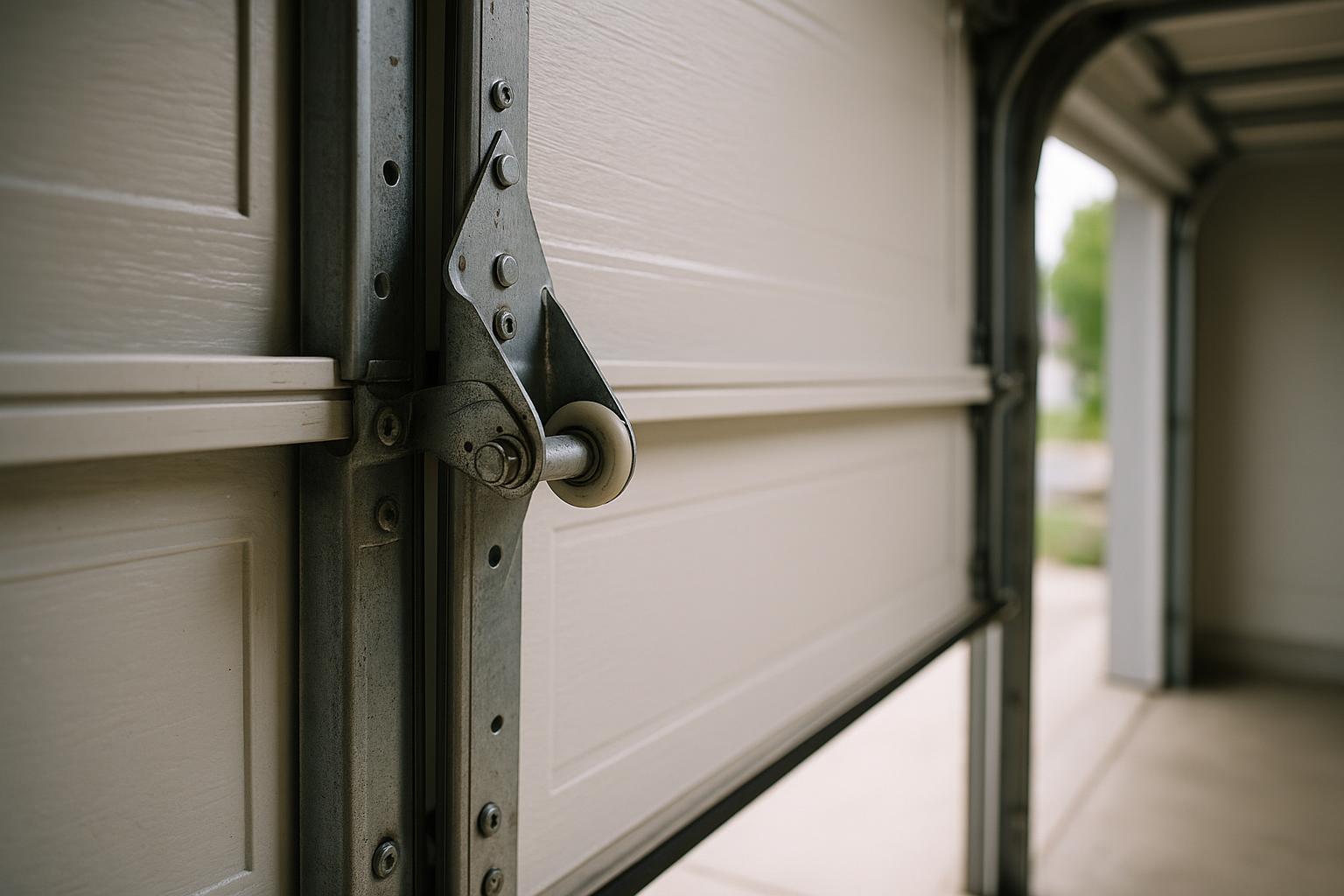
- Rollers are worn out. Steel rollers without lubrication or nylon rollers that have cracked or deteriorated will grind against the track as the door moves up and down.
- Tracks are misaligned. If the vertical or horizontal tracks have shifted even slightly, the door can scrape against them during operation. You might also notice the door moving unevenly or getting stuck partway.
- Hinges are binding. Worn or rusted hinges can cause panels to drag against each other, creating an unpleasant scraping sound.
Squealing or Squeaking
High-pitched squealing is one of the most common complaints we hear from homeowners in Columbia and Ellicott City. It's almost always related to a lack of lubrication. The moving parts of your garage door system — including the rollers, hinges, springs, and bearing plates — need periodic lubrication to operate smoothly. When those parts dry out, metal grinds against metal and produces that unmistakable squeal.
The fix can be as simple as applying a garage door-specific lubricant. However, if the squealing persists after lubrication, the parts themselves may be worn and need replacement.
Rattling or Vibrating
A rattling garage door often points to loose hardware. Over time, the nuts, bolts, and screws that hold your door system together can loosen from the constant vibration of daily use. This is especially common in older doors that haven't had regular maintenance.
Other causes of rattling include:
- A loose chain on a chain-drive opener. If the chain has too much slack, it can slap against the rail and create a rattling or vibrating noise.
- Worn support brackets. The brackets that secure the tracks to the wall or ceiling can loosen over time, allowing the entire track to vibrate during operation.
Banging or Popping
A loud bang or pop when your garage door opens or closes is harder to ignore — and for good reason. This type of noise can signal:
- Torsion spring issues. Springs under high tension can make popping sounds when they're wearing out or when their coils are binding. A sudden loud bang could mean a spring has broken entirely, which requires immediate professional attention.
- Panel problems. If a panel is cracked, warped, or has come loose from its hinges, it can produce a banging noise as the door moves through its cycle.
Humming or Buzzing
If you hear a humming or buzzing sound but the door isn't moving, the problem likely lies with your garage door opener's motor. The motor may be struggling to engage due to a stripped gear, an electrical issue, or a problem with the drive mechanism. In some cases, the opener may simply be reaching the end of its useful life.
When You Can Fix It Yourself
Some garage door noise issues have simple DIY solutions that don't require professional help:
- Lubricate moving parts. Use a silicone-based or lithium-based garage door lubricant on the rollers, hinges, springs, and tracks. Avoid using WD-40 as a long-term lubricant — it's a solvent, not a true lubricant, and it can actually attract dirt and grime over time.
- Tighten loose hardware. Grab a socket wrench and check all the bolts and brackets you can safely reach. Tighten anything that's loose, but be careful not to overtighten.
- Inspect the tracks. Look for visible dents, debris, or buildup in the tracks. Wipe them clean with a damp cloth. Small obstructions can cause surprising amounts of noise.
When to Call a Professional
While basic maintenance is something most homeowners can handle, certain noises point to problems that should only be addressed by a trained technician. You should call a professional if:
- You hear a loud bang and the door won't open — this likely means a broken spring, which is under extreme tension and dangerous to handle without proper tools and training.
- The door is visibly off-track or crooked.
- Grinding or scraping continues after lubrication, suggesting worn rollers or misaligned tracks that need adjustment or replacement.
- Your opener motor hums but the door doesn't move, which could indicate stripped gears or an electrical failure inside the unit.
- You notice frayed cables, which can snap without warning and cause serious injury or damage.
At Columbia Overhead Door Co, we see these issues regularly in homes throughout Columbia, Elkridge, Laurel, and the surrounding areas. Our technicians diagnose the source of the noise, explain what's going on in plain language, and fix the problem right the first time.
Prevention: How to Keep Your Garage Door Quiet
The best way to avoid a noisy garage door is to stay ahead of problems with regular maintenance. Here are a few tips:
- Lubricate all moving parts every six months. This single step prevents the majority of noise complaints we receive.
- Schedule an annual professional inspection. A trained technician can spot worn parts, loose hardware, and alignment issues before they turn into bigger — and louder — problems.
- Consider upgrading to nylon rollers. If your door uses steel rollers, switching to nylon can dramatically reduce noise. Nylon rollers are quieter, don't require as much lubrication, and tend to last longer.
- Upgrade your opener. If you have an older chain-drive opener, it may simply be a loud machine. Belt-drive openers are significantly quieter and are a popular upgrade for homeowners in Columbia who have living space above or adjacent to the garage.
Don't Ignore the Noise
A noisy garage door is more than just an inconvenience. It's your door's way of telling you that something needs attention. Catching a small issue early — a dry hinge, a loose bolt, a worn roller — can save you from a much more costly repair or even a complete door replacement down the road.
If your garage door has started making sounds you can't explain or fix on your own, Columbia Overhead Door Co is here to help. We serve homeowners and businesses throughout Columbia, Ellicott City, Clarksville, Fulton, and the surrounding communities with honest, reliable garage door service. Give us a call, and we'll get your door running quietly again.